

Katana
-
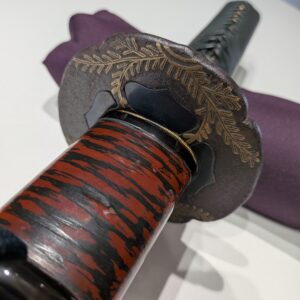 Sengo katana in koshirae
 -
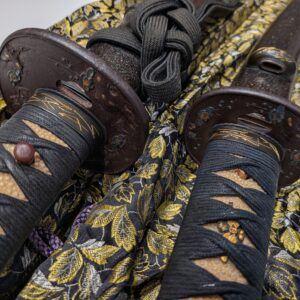 Kinpunmei daisho by Motooki in fine issaku daisho koshirae
 -
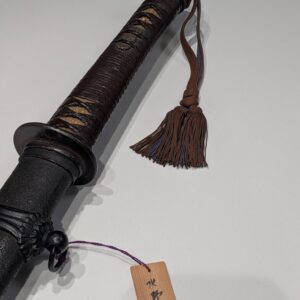 Mizuno Masanori katana in Type 3 gunto koshirae
 -
 Rai Norimichi Katana in Shirasaya with Buke-Zukuri Koshirae
 -
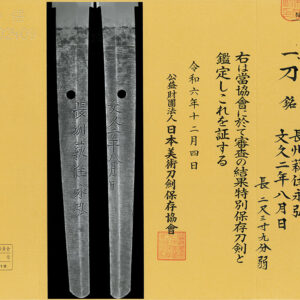 Choshu Nagahiro katana in koshirae
 -
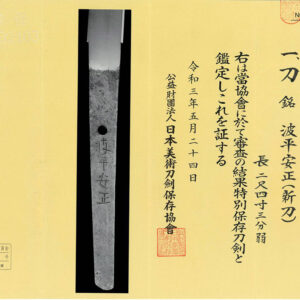 Naminohira Yasumasa katana in koshirae
 -
 Uda katana in koshirae
 -
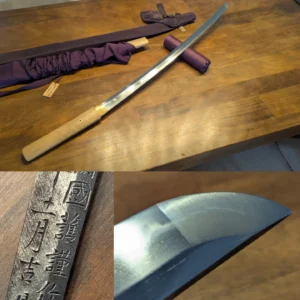 Special Order Miyaguchi Kunimori katana
 -
 Takano Masataka katana
 -
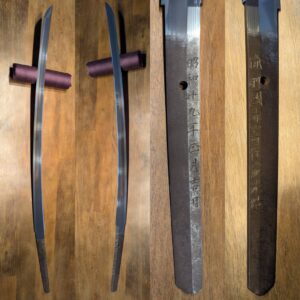 Bizen Toshimitsu hosho-utushimono katana
 -
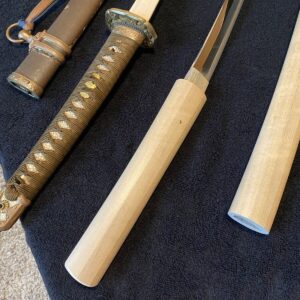 1940 Kotani Yasunori katana
 -
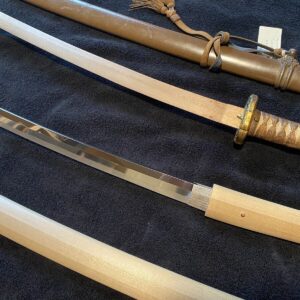 1934 Kajiyama Yasunori katana
 -
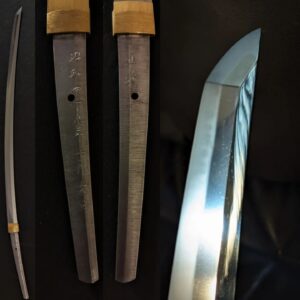 Minatogawa Masataka tachi
 -
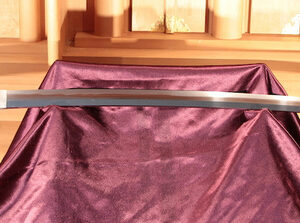 Mounted Gendaito by Wakinaka Sadayuki
 -
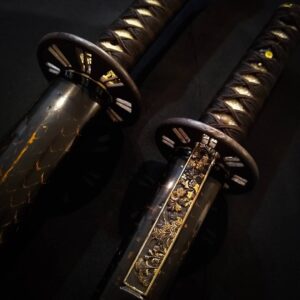 Kinmichi Daisho
Wakizashi
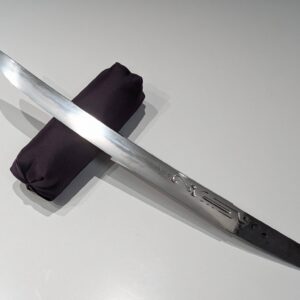
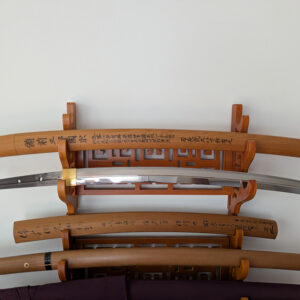
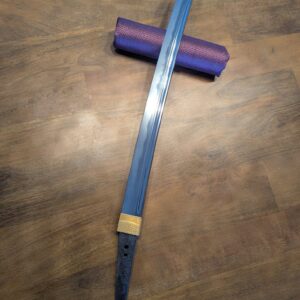

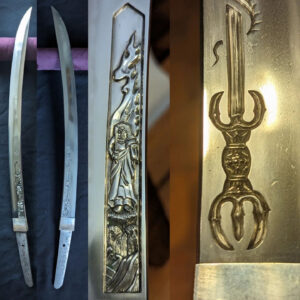
Tanto
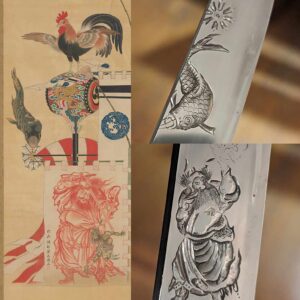
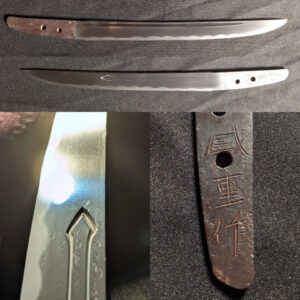
Naginata and Naginatanaoshi
Yari
Swords of Japan offers fine antique Japanese swords and sword fittings for sale. This includes traditionally-made Japanese samurai swords from all time periods from Heian through Reiwa eras. Antique Japanese swords are among the finest blades ever crafted and the swords here are exemplary examples of each school, smith and time period. In addition to offering swords for collectors, we also appraise and translate sword inscriptions, assist with research, curate exhibitions, and offer consultation as collectors work to refine their collecting goals. In many cases, we can assist in helping to refocus on specific areas, consigning swords that collectors choose to sell and locate pieces to fill specific needs within a focused collection. Please view some of our articles and reference content on Japanese swords to learn more. If you would like to discuss consignments, research, translations, or purchasing a piece for your collection, please click here to contact us.
On these pages we include Japanese swords in a variety of tsukuri-komi (construction types). This includes tachi, katana, wakizashi and tanto along with polearms such as naginata and yari. We also offer a wide range of fittings and mountings including full koshirae, tsuba, fuchigashira, menuki, kozuka and kogai. We can also assist with the construction of full koshirae for existing blades. This includes helping to arrange work with skilled craftsmen, curating tosogu for a specific motif and making recommendations for a koshirae appropriate to a specific blade. Please contact us to discuss further.